What Do Robins Eat in the Winter?
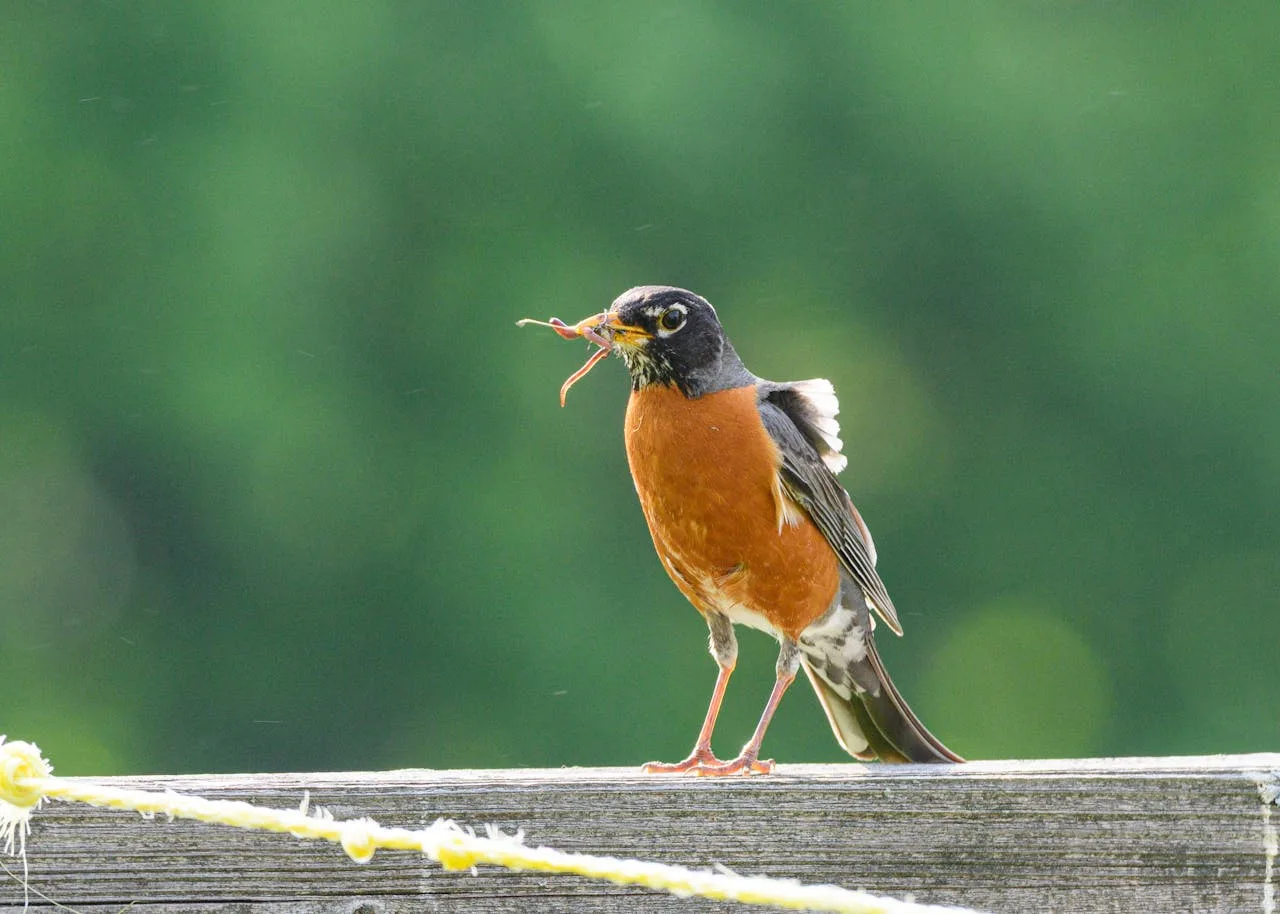
American Robins are among the most common songbirds in the United States. Their striking features make them a sight to behold. One of the most common questions people ask is, what do robins eat in the winter? Typically, robins eat berries and other small fruits found on trees, vines, and shrubs in the winter. They also love dried blueberries, cranberries, and raisins. In this post, we’re going to discuss everything you need to know about robins, including how to attract robins in your very own backyard. What Do Robins Look Like? Robins are small, plump birds that are often no more than 9-11 inches. They have warm orange breasts, white bellies, brown backs, and red cheeks. The white patch on their lower belly and tail are conspicuous during flight. Their wingspan typically ranges from 12-16 inches long across all subspecies. In comparison, young robins are speckled brown and gold. Female and immature robins are slightly paler than male robins, but the difference is extremely slight. Where Do Robins Live? Robins can be found throughout most of North America. They’re highly migratory and would often spend most of their winters in the southern United States. They depart south near the end of August and return north anywhere between February and March, depending on the state’s climate. During summertime, robins often forage out of sight in places such as woodlands, forests, tundras, and mountains near treelines. You may also find them on lawns, city parks, and fields. In the winter, robins tend to move towards moist woodland where berry-producing trees are abundant. What Do Robins Eat in Summer, Fall, and Winter? Author Note:A robin’s diet primarily consists of 60% wild and cultivated berries and fruits, and 40% small invertebrates such as caterpillars, earthworms, grasshoppers, and the like. During winter, robins may visit
American Robins are among the most common songbirds in the United States.